

Three months after its highly publicized opening, the restaurant reaffirms its vocation as a living space for meeting, reflection, and preservation of the gastronomic legacy of the ‘Poblados Marítimos’ (Maritime Villages). The first discussion about the history of the neighbourhood was followed by the presentation of the spot and the premiere of its ‘gastronomic tables’, a new format that, this time, brought together representatives of the press for dining and after-dinner conversation.
Since its inauguration on November 8, 2025, Casa Pescadores has become one of the most talked-about restaurant projects in the city, with an approach that pays tribute to the maritime tradition, home cooking, and the culture of after-dinner conversation, on the beachfront of Cabanyal. The attendance figures for the first quarter reinforce its consolidation, as by the end of January, a total of 14,000 diners had passed through one of the three spaces that make up the restaurant, promoted by Grupo Mercabanyal and Jugando con Fuego. This does not prevent activities from continuing, as the restaurant reaffirms its vocation as a living space for meeting, reflection, and preservation of the gastronomic legacy, with the inauguration of a cycle of conferences, discussions and gastronomic tables.
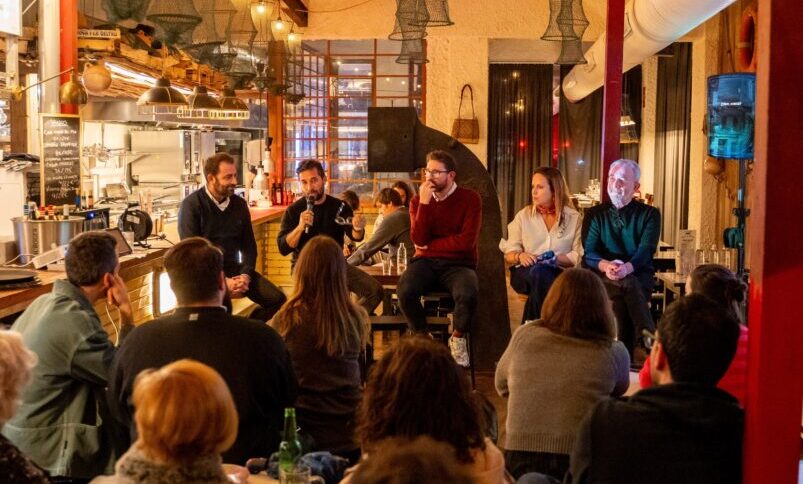
In this context, last Thursday, January 29, Casa Pescadores hosted a colloquium focused on the history of Cabanyal and its cuisine, with the participation of gastronomic journalists Vicent Marco and Marina Falcó; the president of the Academy of Gastronomy of the Valencian Community, Sergio Terol; and the host of the house, the hotelier José Miralles, founding partner and promoter of Casa Pescadores. The meeting was moderated by the gastronomic communicator Ferran Salas and brought together professionals from the sector and cultural prescribers among the public, with a very participatory role.
During the colloquium, Marina Falcó emphasized the role of the hospitality industry as a tool to preserve the culinary identity of the neighbourhood: “El Cabanyal has left a legacy that is culture, identity and love. That these dishes jump from homes to local establishments keeps them alive and makes neighbors from other neighborhoods pilgrimage here.” In the same vein, Sergio Terol highlighted “that idiosyncrasy that is not found anywhere else” and recalled that it is “the area that has best known how to export dishes.” Vicent Marco focused on everyday cuisine and the hospitable nature of the neighborhood: “Sardina de bota (cured sardine) with bread and peppers or with a fried egg is something that is done here and nowhere else. Valencians are highly generous: they will always treat you as if you were at home.”
For his part, José Miralles, a native of the neighbourhood, where his family has always run a hospitality business next to Playa de la Malvarrosa, appealed to collective memory: “Recovering that way of shared eating is to make the culture of a country endure.” And in this sense, he praised that his kitchen team, despite their youth, has been concerned “to understand and respect all the culinary history of the neighbourhood.” In order for this legacy to continue to be transmitted, the owners of ‘Casa Pescadores’ want the activities within the space not to stop. Thus, the meeting also served for the presentation of the official spot, as well as to start a cycle of gastronomic tables, which act as a meeting space for social agents of all kinds.
Before moving on to this after-dinner conversation, and after the public discussion, Casa Pescadores wanted to present its official spot, an audiovisual presentation of the project. Its director, Arturo Sánchez, explained the creative process and how the images seek to capture the soul of the project: the sea, memory, fire, and the leisurely life in front of the shore. Filmed over months, the inivited public was able to enjoy its projection for the first time.
Nets, embers, and endless after-dinner conversations
The first gastronomic table of Casa Pescadores, a new format that was born with the will to generate conversation, exchange of ideas and reflection around traditional cuisine, was held in the grill area, and brought together both agents of the colloquium, as well as other journalists and agents of the sector. In addition to Ferran Salas, Sergio Terol, Vicent Marco and Marica Falcó, the journalist Marta Pascual and the gastronomic communicator Javier Martínez (Encuinarte) joined, as well as José Esteban, also a partner in the project and in charge of the Jugando con Fuego group. All shared a long discussion on gastronomic matters, but also cultural ones, behind closed doors and in total privacy.
The intention of the project is that these gastronomic tables are held on a monthly basis and that diverse profiles pass through them – from the cultural, social or sports fields – always with a common thread: the conversation around the cuisine of the neighbourhood, the culinary tradition of Poblats Marítims and the legacy that remains alive at their tables. These will be open talks, where closeness and confidentiality will act as a basis. With this initiative, Casa Pescadores reinforces its positioning as something more than a restaurant: a space where gastronomy is a meeting point to share, reflect and celebrate a way of understanding life linked to the sea, joy and after-dinner conversation.
About Casa Pescadores
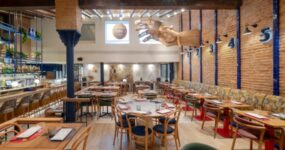
Casa Pescadores vindicates an honest cuisine, based on seafood products, traditional recipes and absolute respect for the rhythm of the neighbourhood. The project, which has Edu Espejo as gastronomic advisor and Marcos Moreno in charge of the day-to-day, is articulated in three different spaces: a traditional bar, a grill and a restaurant. In the bar, a large central counter features classic tapas and traditional stews, along with fresh seafood that varies depending on the day’s catch, in a direct nod to the old Valencian snack bars. You can walk in without a reservation, and it’s the liveliest spot of all.
Meanwhile, the other two spaces currently have a two-month waiting list, although there are always openings that become available. The grill, known as La Jefa (The Boss), works with a seasonal menu of products – meats and fresh fish – cooked to order over the embers, with weights and prices marked daily. For its part, the restaurant offers a set menu, without à la carte options, designed to extend the after-dinner conversation and leisurely enjoy simple, direct cuisine deeply rooted in fire and the sea. Finally, the drinks menu reflects the personality of each space: beer and a selection of wines in the bar; champagne by the glass and cocktails in the grill; and a solid and classic wine cellar in the restaurant, with nods such as Fondillón from Alicante.
Information for diners
Casa Pescadores is open from Wednesday to Friday, from 12:00 noon, and on weekends, from 11:00 am. It will be closed on Mondays and Tuesdays. The restaurant and grill require prior reservation, while the bar can be enjoyed without reservation. The restaurant does not offer dinner service, only lunch with after-dinner conversation, although the grill does offer both lunch and dinner. Reservations are now available through their website.
Report by Will McCarthy
Article copyright ‘24/7 Valencia’
CASA PESCADORES
Calle José Ballester Gozalvo 51, Cabanyal (Valencia)
Hours: Wednesday to Friday, from 12:00 noon; weekends, from 11:00 am
Website and reservations: www.casapescadorescabanyal.com
Related Post

















Leave a comment