

Discover the marvellous Malvarrosa beach, with the captivating architecture and history of ‘Cabañal’ is just a stone’s throw away. Valencia’s popular must-visit beach, Malvarrosa, offers a plethora of activities, restaurants, and views to behold. With the colourful tiled façades of Cabañal, kill two birds with one stone in this bustling part of the city of Valencia! Just to clarify, the Spanish spelling is ‘Malvarrosa’ and the Valencian spelling is ‘Malva-Rosa’. Also, ‘Cabañal’ is the Spanish spelling and ‘Cabanyal’ is the Valencian spelling.
After stepping off the Metro Line 4 (Dr. Lluch), you’ll be stuck for choice! Should you turn on beach mode and swim in the warm Mediterranean Sea, or put on your architectural and cultural appreciation hat and discover the mesmerising-tiled buildings of El Cabanyal?
There’s no need to choose, as both areas are doable in the same day if you start early enough. Start with El Cabanyal, and walk past the seemingly out-of-place Burger King, turn left, and be overwhelmed with the beauty of these intricately designed buildings. Whether you’re looking for fresh “mejillones” – mussels, or you want to get lost in the local bookstores of Calle de La Reina, stroll along the beautiful, authentic late-19th-century houses and admire their beauty.
Why is the architecture in El Cabanyal so unique? El Cabanyal’s architecture reflects its origins as a 19th-century fishing village on Valencia’s coast. Built along narrow, grid-like streets, the neighbourhood features rows of modest, elongated houses known as “casas de pescadores”.
To this day, fresh fish, calamari and mussels can be found being sold daily in this area. ‘Clóchinas Emilio S.L.’ on Calle de La Reina offers a true Valencian experience, with delicious mussels available for hard-to-beat prices at varying weights.
After devastating fires in the 18th and 19th centuries, many wooden huts were replaced with brick structures adorned with colourful ceramic tiles, wrought-iron balconies, and intricate modernist details. This unique blend of maritime vernacular and Valencian modernism has earned El Cabanyal recognition as a historic site of cultural interest. Despite urban pressures and plans for demolition in the late 20th century, local activism helped preserve its rich architectural heritage.
El Cabanyal, integrated into the city of Valencia in 1897, is now viewed as the cultural hub of the seaside areas along Valencia’s stunning coast. One of the most visited streets in this area, Calle de La Reina, hosts the “Centro Cultural Reina 121” – Cultural Centre. This centre includes art pieces that represent the area’s large ethnic diversity.
The building itself is a renovated ‘casa de pescadora’ and was described as having “two lives in one building”, the first one pertaining to conserving the fishing culture in the area, and its newest life carrying this on and adding in the experiences and lives of various immigrant groups in the area.
Despite only being open for one year, the centre hosts a plethora of community activities, such as children designing tote bags to represent their backgrounds and daily activities. To help support cultural centres such as these in Valencia, and to learn more about Valencian culture, head over to this centre, download the programme (available in Spanish and Valencian but can be translated online), and get lost in the recorded stories of those in this beautiful area’s past, and in the present day!
Set just back from Malvarrosa’s lively sands, the grand houses lining the quieter streets whisper of a bygone era. These early 20th-century villas once served as summer retreats for Valencia’s elite, who sought respite from the city’s heat. They are built in a range of styles, ranging from Valencian Modernism to eclectic neoclassical. Many are adorned with ornate façades, decorative ceramic tiles, and wrought-iron balconies. Their generous proportions and leafy gardens hint at the affluence of their original occupants. These truly are dreamhouses!
Some of these residences, like the Casa Museo Blasco Ibáñez, have been preserved and repurposed, offering glimpses into the literary and political history tied to the area. They form an elegant architectural counterpoint to the beach’s vibrant energy, grounding Malva‑Rosa in a rich cultural and social history that extends beyond the sand.
Don’t forget your suncream and beach towels! Stretching along Valencia’s eastern edge, the Malvarrosa beach is a gorgeous section of Mediterranean coastline, with activities and restaurants available from dawn to dusk.
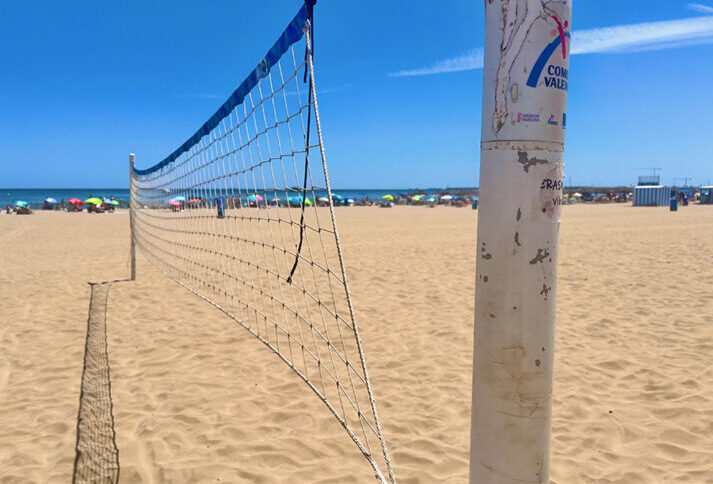
The beach itself is an urban paradise, offering something for all ages; families build sandcastles near the waterline, young people play volleyball and basketball without a care in the world, and joggers trace long arcs along the surf. The inviting Mediterranean waters entice swimmers and paddleboarders, whilst the various volleyball courts and basketball hoops offer a socialising opportunity that’s hard to beat, especially for young people who are new to the city!
Behind the sand, a bustling promenade hosts an array of restaurants and ‘chiringuitos’ serving up iconic Valencian cuisine. Paella by the sea is a ritual here, with terraces offering views of both the beach and the endless horizon. Cafés and ice cream stands decorate the walkway, their shaded awnings perfect for watching the world go by; plus the ideal place to escape the Spanish sun in the height of summer! Creatively designed ‘Cerveceria Freidura’, and a plethora of other authentic Valencian establishments
As you stroll south toward the Marina, the vibrancy of the beach culture escalates with more crowds, stalls and bars. Cyclists speed along dedicated lanes, while street performers draw small crowds. If you’re lucky, you may be able to spot one of the talented sand sculptors, who work from dawn to create ginormous sand creatures, such as a giant lizard.
The marina itself, with its moored yachts and sleek design, contrasts sharply with the laid-back beach scene. Trendy venues like Marina Beach Club add a dose of nightlife energy, with DJs playing as the sun sets over the water.
Art, including a striking boat-shaped water sculpture, and the famous giant Valencian and Spanish flags help guide you along the route, grounding visitors in Valencia’s maritime heritage. This stretch blends leisure, sport, and dining seamlessly, making it as much a social artery as a seaside escape.
This stunning part of Valencia’s coastline is not to be missed! With a plethora of activities, history, and culture to discover, this easily accessible part of the city is hard to beat in comparison to quieter beach areas!
Report by Elliot Fryatt
Article copyright ‘24/7 Valencia’
Photos copyright Elliot Fryatt/ ’24/7 Valencia’
















Leave a comment