

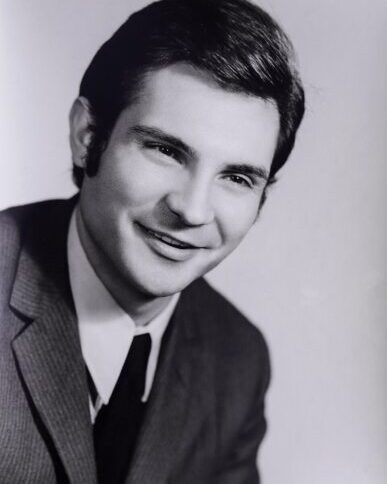

Emilio Baldoví Menéndez was born in Xàtiva on 14 June 1940, barely a year after the end of the Spanish Civil War. Fifty years later, on 17 August 1990, he died on the road near Valencia, still heading towards another concert. Between those two dates he managed to become something that, when he started out, seemed almost impossible: a genuine Spanish rock ‘n’ roll star.Not merely a singer who performed translated versions of American songs. Not simply another member of the first generation of Spanish pop groups. Bruno Lomas was a rocker, showman, pin-up, actor, recording artist and celebrity, and for a few extraordinary years in the 1960s he embodied the arrival of a new kind of Spanish youth. Today, his name is perhaps less familiar outside Valencia than those of Nino Bravo, Miguel Ríos or Raphael. Yet Lomas was there before most of them, and his importance to the history of Spanish rock is difficult to exaggerate. RTVE has described him as one of the great pioneers of Spanish rock, while the University of Valencia has highlighted the extraordinary journey from Los Milos to the international stages of France and Paris.
BEFORE BRUNO: EMILIO BALDOVÍ
The future rock star hardly looked destined to become one.
His father was a military doctor, and Emilio was educated at the Dominican school in Valencia before beginning Law at the University of Valencia. The conventional route was clear: respectable education, respectable profession, respectable life.
Then came rock ‘n’ roll.
Like many young Spaniards of his generation, Baldoví encountered a world that existed beyond the official culture of Franco’s Spain. American films, imported records, Italian popular music and the increasing presence of foreign tourists on the Spanish coast were providing glimpses of another world.
For a teenager, the attraction was irresistible.
And one of the records that made the greatest impression was Gene Vincent’s “Be-Bop-A-Lula”.
The young Baldoví didn’t merely listen to it.
He wanted to sound like it.
VALENCIA DISCOVERS ROCK ‘N’ ROLL
Around 1958, Baldoví began playing with fellow students and friends. Rock ‘n’ roll was still an exotic proposition in Valencia, and the idea of young Spanish musicians reproducing the sound of American teenagers was radically different from the sentimental pop and Latin music that dominated much of the country’s entertainment.
The group that emerged became Los Milos.
The original formation included Baldoví alongside musicians including Salvador Blesa and Vicente Castelló. Interestingly, one of the musicians associated with the early formation was Ramon Pelejero, who would later become internationally known as the singer-songwriter Raimon.
It was an extraordinary intersection of Valencian musical history.
The future Bruno Lomas, Spain’s flamboyant rock ‘n’ roll showman, and the future Raimon, one of the defining voices of the politically conscious Nova Cançó, were briefly part of the same musical universe.
They would ultimately travel in very different directions.
LOS MILOS: THE FIRST VALENCIAN ROCK EXPLOSION
In 1960, Los Milos began recording for Discophon.
These early records are now valuable historical documents. The group tackled songs from the American and Italian repertoire, producing Spanish versions of material such as “Be-Bop-A-Lula”, “Teddy Girl”, “Baila el rock conmigo” and “Zapatos de gamuza azul”. Their recordings are among the earliest examples of Spanish rock ‘n’ roll captured commercially.
The impact in Valencia was considerable.
Los Milos became the city’s leading rock group, playing to young audiences who were discovering the music through records, radio, films and the new culture developing around the tourist boom.
This was not yet the Spain of mass youth festivals, progressive rock and political singer-songwriters.
It was the beginning.
And Bruno Lomas was standing at the front of it.
THE DECISION THAT CHANGED EVERYTHING: FRANCE
The crucial moment came when the group received an opportunity to work in France.
French music entrepreneur Johnny Stark, who was also closely associated with the career of French rock star Johnny Hallyday, recognised something in Baldoví that went beyond the confines of the Spanish market.
Baldoví wanted to go.
His fellow musicians were far less enthusiastic about abandoning Valencia.
That disagreement changed the course of Spanish rock history.
Baldoví left and travelled to France with musicians from Los Diávolos, beginning the transformation from Emilio Baldoví into Bruno Lomas.
The University of Valencia’s account of his career describes this French adventure as the decisive step that took him from the Valencian scene to the European stage.
BRUNO LOMAS ARRIVES IN PARIS
France was a revelation.
Instead of playing small Spanish venues to audiences who were only beginning to understand rock ‘n’ roll, Lomas suddenly found himself operating in a country where youth music was already becoming a major cultural phenomenon.
The group performed extensively and eventually appeared at the legendary Olympia in Paris.
And this was no minor provincial booking.
The 1964 Olympia appearance placed the Valencian rocker on the same bill as major international names including Stevie Wonder, Dionne Warwick and The Shirelles.
Imagine the cultural leap.
A young man from Xàtiva, raised in conservative post-Civil War Spain, was suddenly standing on one of Europe’s most prestigious stages performing rock ‘n’ roll to a Parisian audience.
It was a remarkable achievement.
THE BIRTH OF BRUNO LOMAS Y LOS ROCKEROS
The French experience also produced the name by which he would become famous.
After working with the musicians who had accompanied him from Valencia, the act evolved into Bruno Lomas y Los Rockeros.
The name was perfect.
It sounded international, modern and slightly dangerous.
And Bruno Lomas himself looked the part.
He had the clothes, the hair, the attitude, the cars and the swagger.
In photographs from the period, he looks less like a conventional Spanish singer than someone who has stepped out of an American rock film.
That image mattered.
In the early 1960s, appearance was part of the revolution.
THE RETURN TO VALENCIA
When Lomas returned to Spain, he was no longer simply another local singer.
He had acquired something almost unheard of for a Spanish performer:
international experience.
He had played hundreds of concerts, developed a professional stage act and acquired a sound and presentation that were considerably more sophisticated than those of many domestic groups.
He was now a rock star.
And Valencia was ready for him.
The young people buying records and attending guateques wanted something different from the respectable entertainment offered by their parents’ generation.
They wanted records they could dance to.
They wanted clothes that looked modern.
They wanted American cars, imported drinks, foreign films and music with attitude.
And they wanted Bruno Lomas.
THE GUATEQUE GENERATION
The guateque became one of the great social institutions of 1960s Spain.
When parents disappeared for the weekend, young people could gather at home, put records on the turntable, drink, flirt and dance.
The music mattered enormously.
Rock ‘n’ roll provided the soundtrack to a generation that had grown up under dictatorship but was increasingly conscious that the outside world was changing.
The economic transformation of Spain was producing more consumer goods, more tourism and greater contact with northern Europe.
And music was one of the clearest signs of the change.
Bruno Lomas was not necessarily preaching rebellion.
He was doing something perhaps more important for his particular generation:
he was making rebellion look attractive.
THE RECORDING CAREER TAKES OFF
By the middle of the 1960s, Lomas had become a national recording star.
His records moved between rock ‘n’ roll, rhythm and blues, beat music, pop and romantic balladry. He recorded Spanish adaptations of international hits but also worked with original material.
Songs such as “La casa del sol naciente”, “Comprensión”, “No puedes comprarme”, “Be-Bop-A-Lula”, “Ayer cumpliste los 16” and “Codo con codo” became part of his growing repertoire. His recordings for Regal, EMI’s Spanish subsidiary, established him as a major national artist.
And then came one of the most important records of his career.
BRUNO LOMAS LIVE
In 1967, Lomas released “Bruno Lomas canta en directo”.
It has a special place in Spanish rock history because it was the first Spanish rock album recorded entirely live. It was recorded at the Teatro Calderón in Barcelona and captured Lomas in his natural environment: on stage, in front of an audience.
This is an important part of his legacy.
The studio recordings can make Lomas sound like a product of the Spanish pop industry of the 1960s.
The live album demonstrates what he really was:
a performer.
He had learned the craft in France, and he knew how to command a room.
THE GREAT TRANSFORMATION
But by 1966-67, Lomas faced a dilemma.
The musical world was changing rapidly.
The young rock ‘n’ roller who had once seemed impossibly modern was now surrounded by new sounds: The Beatles, Bob Dylan, soul, psychedelia, British beat, American folk-rock and politically conscious singer-songwriters.
Lomas responded by changing direction.
He increasingly embraced the role of crooner and mainstream pop star.
The transformation was commercially understandable.
But artistically, it proved much more complicated.
His old fans had discovered him as a wild rock ‘n’ roller.
Now they were being offered orchestras, romantic ballads and a more polished image.
Vicente Fabuel, author of the major 2019 biography Bruno Lomas. Tú me añorarás, has argued that this transformation was one of the central contradictions of Lomas’s career: he possessed considerable musical taste, but the new musical currents were moving in directions that did not necessarily suit his strengths.
FROM ROCKER TO CROONER
The comparison with Tom Jones is revealing.
Lomas increasingly presented himself as a powerful male vocalist capable of tackling soul, pop and orchestral material.
He could do it.
But the problem was that Spain was changing faster than he was.
By the end of the 1960s, the generation that had danced to his rock ‘n’ roll was growing up.
The younger generation wanted something else.
For many, the new heroes were not flamboyant rock stars driving sports cars.
They were singers with political messages.
They were Joan Manuel Serrat, Raimon, Paco Ibáñez and the emerging generation of cantautores.
The cultural rebellion was becoming more explicitly political.
Lomas had always been more interested in freedom of behaviour than political confrontation.
That distinction would eventually become crucial.
CINEMA, CELEBRITY AND “CODO CON CODO”
Lomas also entered the world of Spanish cinema.
He appeared in films including Codo con codo (1967) and Chico, chica, ¡boom! (1969), taking advantage of the connection between pop music, teenage audiences and the cinema.
For a brief period, he seemed to be everywhere.
Records.
Concerts.
Cinema.
Television.
Magazines.
Cars.
Women.
Celebrity.
This was the era when Spain was discovering the modern concept of the pop star.
And Bruno Lomas was one of its earliest examples.
BUT THE TIMES WERE MOVING ON
By the end of the 1960s, the cultural ground beneath him had shifted.
Spain was still a dictatorship, but Spanish society was becoming increasingly urban, educated, mobile and internationally connected.
The old rock ‘n’ roll rebellion looked increasingly nostalgic.
Meanwhile, the music scene was becoming more sophisticated.
Progressive rock was arriving.
Soul was becoming fashionable.
The cantautores were providing a soundtrack for political dissent.
And a new generation was discovering Anglo-American music directly.
Bruno Lomas was beginning to look like yesterday’s rebel.
“VEN SIN TEMOR”: THE UNEXPECTED COMEBACK
Then, in 1972, came the song that gave him one last major commercial revival.
“Ven sin temor” was a Spanish adaptation of the international hit “How Do You Do”, and it arrived at precisely the moment when Lomas’s career appeared to be fading.
The song worked.
Really worked.
La Fonoteca describes it as the record that unexpectedly relaunched a career that appeared to be approaching its end.
For a moment, Bruno Lomas was fashionable again.
It was a reminder that beneath all the changing styles there remained something powerful in his voice and personality.
But the revival did not restore his position permanently.
The 1970s belonged to another generation.
THE POLITICS OF BRUNO LOMAS
There is an uncomfortable part of the Bruno Lomas story that cannot simply be ignored.
Unlike many of the singer-songwriters who became symbols of the democratic opposition, Lomas never reinvented himself as a political dissident.
His rebellion had always been principally cultural and personal.
Later, his public expressions of support for Franco and his association with the extreme right, including Fuerza Nueva, made him increasingly difficult for younger audiences to embrace during the transition to democracy. His political associations form an important part of the controversy surrounding his later reputation.
This makes his story more complicated — and, in historical terms, more interesting.
He had helped introduce the aesthetics of youth rebellion into Franco’s Spain.
But he was not himself a champion of the democratic political opposition.
Bruno Lomas wanted the freedom to be Bruno Lomas.
That was not the same thing as demanding political democracy.
THE MOVEMENT THAT LEFT HIM BEHIND
By the late 1970s, Spain had changed almost beyond recognition.
Franco was dead.
The dictatorship was gone.
The Transition was underway.
And the cultural explosion known as La Movida was beginning to transform Madrid and eventually Spain.
Lomas suddenly found himself representing an earlier age.
The irony was extraordinary.
The man who had once seemed impossibly modern now belonged to the musical past.
Yet the new generation did not entirely reject him.
THE FINAL ROCK ‘N’ ROLL MOMENT
In Madrid, Lomas was given an opportunity to show what he could still do.
At the Sala Jácara, he returned to his original rock ‘n’ roll repertoire in front of a new generation of musicians, industry figures and young members of the emerging scene.
And he reportedly brought the house down.
It was almost a Spanish version of an old-fashioned rocker’s comeback special.
For one night, the years disappeared.
The crooner image was put aside.
The politics were put aside.
The changing fashions were put aside.
And Bruno Lomas became the rocker again.
The problem was that one brilliant concert could not reverse twenty years of musical history.
THE LAST YEARS
Lomas continued working, but the scale of his career became progressively smaller.
He toured.
He appeared on television.
He performed his “Bruno Lomas Show”.
He continued recording intermittently.
There were occasional successes, including records during the 1970s, but he was no longer a dominant figure in Spanish popular music. His later recordings included material such as “Soolaimon”, “Rock de la prisión”, “Baby rock’n’roller” and “Rogaré”.
The great national star of the 1960s was becoming a nostalgic touring attraction.
But there was still a considerable audience for him.
And Bruno himself remained fascinated by the world of glamour, speed and performance.
THE CARS
Cars were an important part of the Bruno Lomas mythology.
The image of the rocker arriving in a fast, expensive car fitted perfectly with the persona he had created in the 1960s.
He represented something that Spain had barely possessed before:
the glamorous male pop star.
The car, the clothes, the hair and the confidence were all part of the package.
In his later years, his interest in sports cars became particularly strong.
And tragically, the road would ultimately become the setting for his death.
THE FINAL JOURNEY
On the night of 17 August 1990, Bruno Lomas was travelling towards Llíria, where he was due to perform.
His car collided with a stationary lorry on the A-7 near Albuixech. He was taken to La Fe hospital in Valencia, where he died shortly afterwards.
He was only 50 years old.
Contemporary reporting in El País described him as one of the pioneers of Spanish rock and noted that, even after years away from the recording studio, he had been considering recording another album.
The man who had spent three decades travelling towards stages had died while travelling towards another one.
He was buried in Xàtiva, the city where Emilio Baldoví had been born half a century earlier.
WHAT DID BRUNO LOMAS ACTUALLY CHANGE?
The easiest way to understand Bruno Lomas is not to ask whether he was Spain’s greatest singer.
He wasn’t.
Nor was he necessarily Spain’s greatest songwriter.
That isn’t really the point.
His importance lies somewhere else.
He helped make rock ‘n’ roll imaginable in Spain.
Before the great Spanish rock industry existed, before the major festivals, before commercial pop radio became a youth phenomenon, there were young men like Emilio Baldoví buying records and trying to reproduce those sounds.
Los Milos were among the pioneers.
And Lomas took that experiment further than almost anybody.
He went to France.
He played the Olympia in Paris.
He recorded for major labels.
He made films.
He released a pioneering live album.
He became a national celebrity.
He showed Spanish teenagers that their own country could produce a rock star.
THE VALENCIAN CONNECTION
There is also something particularly significant about his being Valencian.
Barcelona and Madrid would eventually dominate the Spanish music industry.
But in the earliest days of Spanish rock, Valencia was not peripheral.
It was one of the places where the new music took root.
The city’s Mediterranean connections, proximity to France and Italy, tourist economy and relatively lively entertainment culture helped make it fertile territory for imported musical fashions.
Los Milos were part of that story.
So was Bruno Lomas.
And decades later, his name remains deeply embedded in the musical history of the Valencian Community.
BRUNO AND NINO
There is a particularly poignant connection with another legendary Valencian singer:
Nino Bravo.
Photographs exist of Bruno Lomas together with Nino Bravo and Yaco Lara, reminders that these two very different singers emerged from the same extraordinary Valencian musical generation.
Nino would become the great voice of Spanish romantic pop.
Bruno was the rocker.
Both were products of a Valencia that was becoming increasingly connected with the outside world.
And today both are remembered as part of the golden age of Valencian popular music.
Indeed, Bruno Lomas is due to receive renewed recognition in Valencia’s 2027 municipal Fallas, in a tribute connected with Nino Bravo and the musical culture of the 1960s, 70s and 80s.
THE MAN WHO ARRIVED TOO EARLY
Perhaps that is the best way of describing Bruno Lomas.
He arrived early.
He was a rock star before Spain really knew what a rock star was.
He performed American rock ‘n’ roll before the country’s youth market had properly developed.
He went to Paris before Spanish pop had established itself internationally.
He released a live rock album before the genre had become established in Spain.
And then, when Spain finally became culturally liberated, he was already becoming an anachronism.
His tragedy was not simply that his career declined.
It was that the future he had helped announce eventually moved beyond him.
WHY BRUNO LOMAS STILL MATTERS
Listen today to “Be-Bop-A-Lula”, “Zapatos de gamuza azul”, “La casa del sol naciente” or the live recordings and the historical importance becomes obvious.
The sound is unmistakably of its time.
But so is the attitude.
There is swagger there.
There is excitement.
There is the sense of somebody who has discovered that the world is much larger than the one he was born into.
That may be Bruno Lomas’s greatest legacy.
He did not overthrow Franco.
He did not lead a political movement.
He did something smaller, but culturally significant.
He made Spanish teenagers want to dance.
And in the Spain of the early 1960s, that was already a kind of revolution.
BRUNO LOMAS — KEY DATES
1940 — Emilio Baldoví Menéndez is born in Xàtiva, Valencia, on 14 June.
1958 — Begins performing rock ‘n’ roll with fellow students.
1960 — Los Milos begin recording for Discophon.
1962-63 — Lomas develops his career in France with Los Diávolos and the emerging Rockeros.
1964 — Bruno Lomas y Los Rockeros perform at the Olympia in Paris, sharing the bill with international stars.
1965-66 — Major national recording success with Regal/EMI.
1967 — Releases Bruno Lomas canta en directo, a landmark in Spanish rock history.
1967-69 — Appears in films including Codo con codo and Chico, chica, ¡boom!.
1972 — “Ven sin temor” unexpectedly revives his commercial career.
Late 1970s-80s — Continues touring and recording intermittently.
1990 — Dies in a road accident near Albuixech while travelling to perform in Llíria.
2027 — Bruno Lomas is set to be honoured in Valencia’s municipal Fallas as part of a tribute to the city’s great popular music figures.
THE BOTTOM LINE
Bruno Lomas was not simply Valencia’s first rock star. He was one of the people who demonstrated that Spain could have rock stars at all.
Before the democratic transition, before La Movida and before Spanish pop became an established industry, Emilio Baldoví put on the quiff, picked up the microphone and showed Valencia — and eventually Spain — what rock ‘n’ roll looked like.
And for a brief, extraordinary moment in the 1960s, Spain’s future sounded like Bruno Lomas.
Report by ’24/7 Valencia’ team
Article copyright ’24/7 Valencia’
Related Post














Leave a comment