

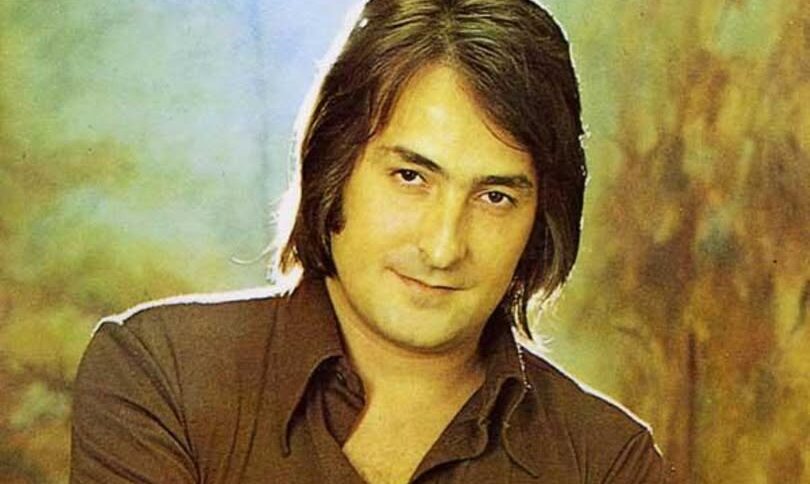

3 August marks the birthday of one of Valencia’s greatest musical icons, Nino Bravo, a singer whose remarkable voice continues to captivate audiences more than half a century after his untimely death. Born Luis Manuel Ferri Llopis on 3 August 1944 in Aielo de Malferit, his extraordinary career lasted only a few years, yet his influence remains stronger than ever. Every year, his birthplace celebrates his life with the Festival Nino Bravo, attracting devoted admirers from across Spain and as far afield as Chile, Mexico and Australia. It is just one of more than twenty fan festivals and conventions held throughout the Spanish-speaking world, a testament to the enduring affection for the Valencian singer.
Although born in the Vall d’Albaida, Nino Bravo’s story is inseparable from the city of Valencia. His family moved there when he was still a baby, part of the post-war migration that saw thousands of rural families seek new opportunities in Spain’s growing industrial centres. He grew up in the neighbourhood around Calle de la Visitación, close to Calle Sagunto, where a statue today commemorates one of the city’s most beloved cultural figures.
Like many aspiring musicians of his generation, Bravo began by performing popular international hits. During his teenage years he sang with local groups including Los Hispánicos and Los Superson, covering songs by artists such as Cole Porter, The Platters and Domenico Modugno. Success proved elusive, however, and it was only after completing his military service in 1964 that he adopted the stage name Nino Bravo and began building the career that would transform him into a household name.
His early years were far from glamorous. He toured village fiestas and summer festivals throughout the Valencian Community while still working as a jewellery salesman. That working-class background helped shape the public’s perception of him. Unlike many politically engaged singer-songwriters of the era, Nino Bravo represented the hopes and dreams of ordinary Spaniards. His songs offered romance, optimism and escapism during the final years of the Franco dictatorship, making him enormously popular with everyday audiences.
Those who knew him consistently describe a man untouched by celebrity. Friends remembered someone who remained loyal to his childhood companions despite his growing fame. Paco Samper, a lifelong friend, famously described him as “just a normal bloke with an incredible voice”—a phrase that perhaps captures his character better than any official biography.
Of course, it was that extraordinary voice that truly distinguished him. Possessing exceptional range, power and emotional control, Nino Bravo became one of Spain’s finest interpreters of popular song. He rarely wrote his own material, but he possessed the rare ability to make every song unmistakably his own.
His breakthrough arrived in 1970 when celebrated composer Augusto Algueró offered him “Te Quiero, Te Quiero,” a song originally intended for Lola Flores. It became a huge success, even reaching audiences beyond Spain in countries including France and Germany. The hits followed rapidly: “Noelia,” “Perdona,” “Mi Gran Amor,” “Voy Buscando,” “Un Beso y Una Flor,” “Mi Tierra” and many others established him as one of Spain’s biggest stars.
Television also played an important role in his rise. At a time when Spain had only two television channels, his appearances on the hugely popular Saturday night programme “Pasaporte a Dublín” introduced him to millions of viewers across the country.
By early 1973, his career appeared limitless. Following the success of “Libre,” now regarded as one of the defining songs of the era, he was preparing ambitious international projects, including recordings of songs by The Beatles and Leonard Cohen. He also hoped to create a Valencian-based music company to promote artists from the region, reducing the industry’s dependence on Madrid.
Sadly, those plans would never materialise.
On 16 April 1973, while travelling to Madrid to help promote the Valencian group Humo, Nino Bravo lost control of his white BMW on the N-III near Villarrubio (Cuenca). The vehicle overturned several times. Despite desperate attempts to save him, the injuries proved fatal. He died at just 28 years of age, leaving behind his wife and two daughters.
His death shocked Spain, but his music never disappeared. The posthumous release of “América” became another major success, while successive generations have rediscovered classics such as “Un Beso y Una Flor”, “Libre” and “Te Quiero, Te Quiero.” His songs continue to feature on radio stations, television programmes and at festivals across Spain, while Valencia proudly embraces him as one of its greatest cultural ambassadors.
Walk through any local fiesta, attend a summer verbena or listen to supporters at Mestalla on a special night, and chances are you’ll hear one of his songs. More than fifty years after his passing, Nino Bravo remains woven into the cultural identity of Valencia.
For anyone discovering his music for the first time, “Un Beso y Una Flor” remains the perfect introduction to the unforgettable voice of a singer who became, and remains, an eternal legend.
Report by ’24/7 Valencia’ team
Article copyright 24/7 Valencia
















Leave a comment