


A walk along Valencia’s waterfront offers much more than just views of the Mediterranean. From the wide sands of Malvarrosa Beach to the towering cranes of the Port of Valencia, the coastline is constantly changing. Historic fishing streets give way to trendy cafés, old industrial buildings find new life as cultural spaces, and luxury yachts share the horizon with cargo ships. Together, these places tell the story of a city that has grown and evolved alongside the sea.
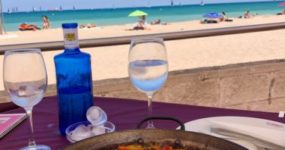
It starts with sand that feels wider than it should be for a city edge. At Malvarrosa Beach, the Mediterranean settles rather than arrives, stretching into a long blue line beside the boardwalk. People move through it easily, from runners tracing the water’s edge to families spread across the sand and older residents sitting quietly, watching the sea like it is part of their daily routine. Public showers, rented umbrellas, and rows of beach chairs turn the shoreline into a temporary living space, while volleyball and soccer games spill across the sand, making the beach feel less like a destination and more like a shared extension of the city. This openness sits over a longer history, when Malvarrosa was a semi-rural edge of Valencia made up of dunes, marshland, and fishing huts. As the city expanded in the nineteenth century, the coastline shifted from working ground into leisure space, taking its name from the malvarrosa flower once cultivated here. Just behind the beach, the Casa Museo Blasco Ibáñez reflects that in-between identity, where the lives of fishermen and seaside retreats once overlapped and still quietly shape how the place feels today.
A few streets inland, Calle de la Reina pulls you into El Cabanyal, and the openness of the beach tightens into narrow streets and close-set buildings. The air feels more enclosed, with tiled façades, painted walls, and worn surfaces that show a neighborhood shaped over time rather than planned all at once. Once an independent fishing village, El Cabanyal was built around the rhythm of the sea, with houses oriented toward the coast and daily life structured by fishing and harbor work. That history still sits alongside the present, where cafés and small shops now share space with older homes and long-standing doorways, creating a constant overlap rather than a clean break between past and present.
La Tahona del Abuelo then appears almost without announcement. You notice it first by the smell of fresh bread drifting into the street before you see the sign itself. This bakery has existed for generations and has become part of the everyday culture of Cabanyal. It is not treated like a landmark so much as a constant. People step in quickly, order, and leave, continuing routines that have barely changed over time. Places like this carry a quiet sense of history because they survive through use rather than preservation.
Similarly to La Tahona del Abuelo, La Fábrica de Hielo shows how old places in Cabanyal are still being used rather than just preserved. As the streets loosen and the density fades, the building appears as a heavy industrial shell that still clearly carries its past. It was once part of the fishing infrastructure, where ice was produced and stored so catches from the Mediterranean could last long enough to reach markets across Valencia. It linked the sea’s pace directly to the city’s pace before refrigeration existed. Today, it has been transformed into a cultural space for events, music, and gatherings. Even so, the original structure is still visible in its scale and materials. It does not feel fully changed, but instead like a place that continues to serve the city in a new way.
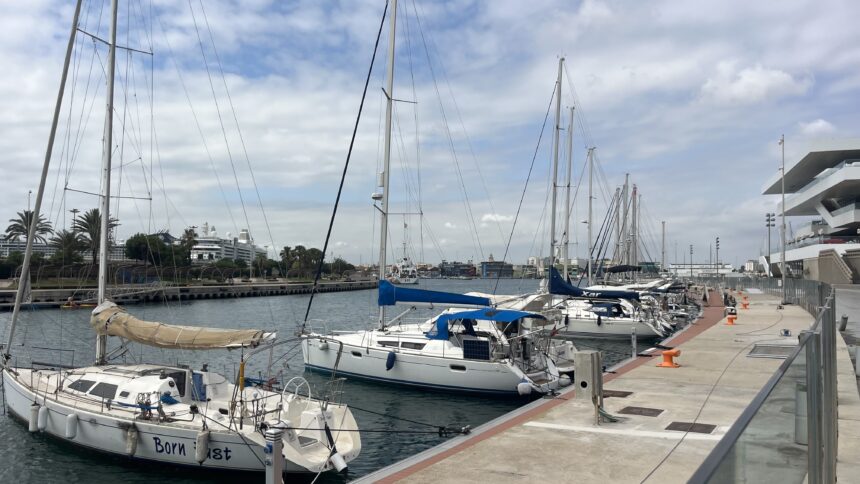
On the other hand, The Marina de Valencia feels more planned and more open than what came before it. The transition is gradual but noticeable. Streets widen, and the waterfront becomes more structured and visible. The sea feels framed rather than simply encountered. This area changed significantly in the early 2000s when Valencia hosted the America’s Cup sailing competitions. What was once a more industrial part of the port was redesigned into a public waterfront. Spaces that had been restricted were opened up and reshaped for leisure, events, and sailing culture, including places like Marina Beach Club, which reflects its current focus on social life and waterfront leisure. This marked a clear shift in how Valencia began presenting its relationship with the sea. Today, yachts sit in the marina almost like displays. The promenade is built around movement and visibility. Everything feels directed outward, toward the water, and toward being seen.
You will also see Veles e Vents rise above the marina in stacked horizontal layers that shift as you move around it. It feels architecturally modern and designed for looking outward rather than inward. Originally built for the America’s Cup, it now works as a viewpoint over the entire waterfront. From its terraces, the contrast becomes clear. Leisure spaces stretch in one direction, while the industrial port extends in the other. It stands at the point where these two versions of the coastline meet.
As the walk continues toward the Port of Valencia, the atmosphere shifts into a more industrial setting. The marina gradually gives way to large-scale port infrastructure, and the space begins to feel less like a public waterfront and more like the working edge of the city. The Port of Valencia has developed over centuries and is now one of the busiest container ports in the Mediterranean. Its current form reflects a long history of maritime trade that has shaped the city since medieval times. What is visible today in cranes, containers, and cargo ships represents the latest stage of that long process of expansion and global connection. Between the structures, the Banderes Gegants d’Espanya come into view. The oversized Spanish and Valencian flags stand out against the industrial landscape, marking identity within a space defined by international trade and movement. Even here, the sea remains present, visible between the port structures and reminding you that this entire area exists because of it.
By the end of the walk, the coastline reads less like separate places and more like one continuous edge shaped by different uses over time. From Malvarrosa’s open sand to Cabanyal’s lived-in streets, from repurposed industrial buildings to the structured marina and the working port, each stretch reflects a different layer of Valencia’s relationship with the Mediterranean. Nothing feels isolated or fully replaced. Instead, everything sits alongside what came before it, forming a coastline that is constantly adapting while still anchored to the same sea.
Report by Lilly Salvador
Article copyright ‘24/7 Valencia’
Photos copyright Lilly Salvador/ ’24/7 Valencia’













Leave a comment