

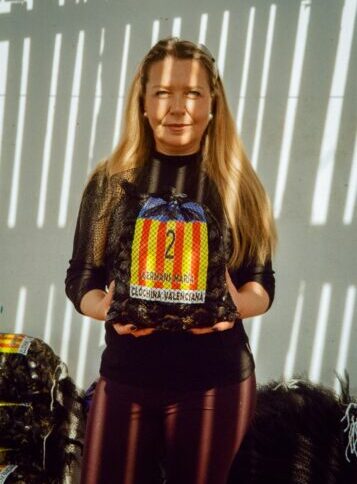
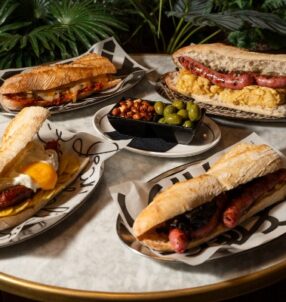
The mussel will be available on the menu, both in the bar and grill areas, while supplies last. Casa Pescadores’ supplier is Amparo Casaus, ‘Amparín’, considered the last great clòtxina harvester of the Poblados Marítimos. Amparo María Casaus is better known as ‘Amparín’. A clòtxina harvester from childhood to the present. One of the longest-standing guardians of the quality of this mollusc, so characteristic of the coast of Valencia. She is also a key figure in the Poblados Marítimos. She is the main supplier of clòtxina for ‘Casa Pescadores’, that bivalve that takes on special importance in May, when the restaurant enthusiastically announces its arrival on their menu, both in the bar and grill areas. The kitchen team, led by chef Marcos Moreno, prepares it both steamed and grilled, depending on the area chosen. In this way, fresh clòtxina will be served from Wednesday to Sunday, during lunch and dinner service.
The prized delicacy will remain throughout the season, making the wait for summer more enjoyable. But beyond its gastronomic value, the initiative also seeks to spread knowledge about the clòtxina mussel, with an extensive programme of activities, which will include a large appetizer open to the public, scheduled for May 30. A contest will act as an attraction, creating a great atmosphere, on a day during which the Valencian clòtxina will take centre stage, thus consolidating the establishment’s commitment to spreading Valencian tradition. In culinary matters, ‘Casa Pescadores’ remains faithful to local produce, more specifically from the maritime neighborhood of El Cabanyal, the essence of the space that opened its doors last November.
Heir to a family saga with more than 70 years of history, Amparín represents a form of artisanal work that has been passed down from generation to generation and that today remains true to its origins. In a context where production tends to be mechanized, she continues to harvest the clòtxina manually, respecting the rhythms of nature and the balance of the environment. “It is the most ecological cultivation there is: it is what your own hands do and what nature gives you,” she says. The singularity of the Valencian clòtxina lies, among other factors, in the salinity of the Gulf of Valencia, which gives it an intense and characteristic flavour: “The salinity of the Gulf of Valencia is unique, it is what gives our clòtxina that special flavour and what makes it different.”
Amparín debunks some myths for those less versed in clòtxina mussels: “People tend to think that the lighter one is the female and the darker one is the male, but it’s just the opposite. This mollusc is hermaphrodite: the redder one takes on the role of female and the lighter one the role of male, although both have the same flavour.”
In addition to clòtxina, there are many other gastronomic proposals that are the hallmark of El Cabanyal, and that can also be tasted at ‘Casa Pescadores’. Some examples are titaina, made with tomato sofrito, salted tuna (tonyina de sorra), pine nuts and pepper, very linked to seafaring families; suquet de rape, a seafood stew in which the fish is cooked in a short broth with potatoes, sofrito and fish stock; or all i pebre, linked to the Albufera of Valencia, but that can also be tasted in the bar of Casa Pescadores.
Returning to the clòtxinas, Marcos Moreno personally travelled to the rafts to learn firsthand the entire cultivation process of this product: from harvesting to selecting the product, learning to distinguish its quality, handling and cooking directly from the expert’s advice. Specifically, this learning took place in raft no. 2 of the Port of Valencia, operated by Germans María.
This is a floating installation located in protected waters of the port area. This platform supports a system of submerged ropes where the clòtxinas grow feeding naturally, which guarantees a sustainable process that respects the marine environment. Managed by a family business with a long tradition in the sector, this raft is part of the historical network of marine nurseries in the Grao de Valencia, contributing to preserving a local, seasonal and high-quality production model that supplies both restaurants and local consumption.
‘Casa Pescadores’ opened its doors last November. Located in an old fishermen’s house and naval carpentry workshop, at 51 C/ José Ballester Gozalvo, directly overlooking El Cabanyal beach, the restaurant pays homage to the seafaring tradition, home cooking and life by the shore. Behind the gastronomic project are Grupo Mercabanyal and Jugando con Fuego, in addition to having a kitchen driven by the team of the Flama restaurant, with Edu Espejo as a gastronomic advisor and Marcos Moreno in charge of the daily service.
With this proposal, Casa Pescadores reaffirms its commitment to local produce and, also, to the producer who makes it possible through family heritage, as is the case of Amparín. The space will continue to offer carefully crafted Valencian-style dishes, positioning itself as a restaurant where gastronomy is always linked to the culture of the El Cabanyal neighbourhood.
Report by Will McCarthy
Article copyright 24/7 Valencia
MORE ABOUT CASA PESCADORES
Website: www.casapescadorescabanyal.com
Instagram:www.instagram.com/casapescadorescabanyal
Related Post














Leave a comment