

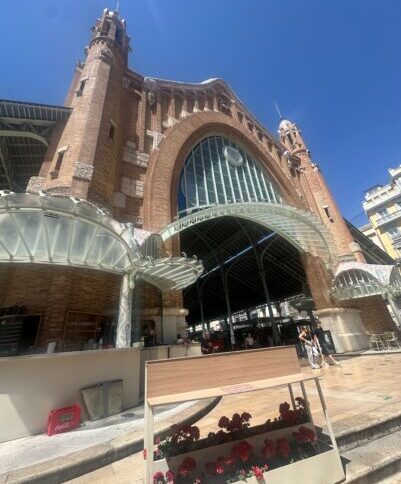

To understand the soul of Valencia’s modern gastronomy scene, one must step away from the narrow, medieval alleys of El Carmen and head toward the wide, tree-lined avenues of the elegant L’Eixample district. Here, framed by upscale boutiques and stately bourgeois apartment buildings, sits the Mercado de Colón (Colón Market). Today, it functions as one of the city’s most exclusive culinary sanctuaries—a glittering open-air pavilion where locals and travellers spend hours sipping craft beers, sampling artisanal cheeses, and lingering over local horchata. However, the Mercado de Colón we experience today is radically different from the space conceived over a century ago. Its journey from a traditional, neighbourhood market to a high-end gastronomic hub is a fascinating study in urban evolution, architectural brilliance, and the changing social fabric of Valencia.
The Birth of a Modernist Masterpiece
At the turn of the 20th century, Valencia was undergoing a massive economic and demographic boom. The old medieval walls had been pulled down, and the city was expanding rapidly outward. The affluent families of the newly developed L’Eixample neighbourhood needed a centralized market to purchase their daily goods, but they also wanted a monument that reflected the city’s growing wealth, artistic ambition, and industrial progress.
Enter Francisco Mora Berenguer, a visionary local architect who had studied in Barcelona alongside the masters of Catalan Modernism, including Antoni Gaudí. Tasked with creating a grand public market, Mora Berenguer set out to build something that was both deeply functional and breathtakingly beautiful.
Inaugurated on Christmas Eve in 1916, the building was a triumph of Valencian Modernism. Mora Berenguer ingeniously combined industrial raw materials—like massive, sweeping cast-iron beams and riveted steel arches—with the warmth of traditional Valencian craftsmanship. The most striking feature of the market remains its grand, 24-metre-high brick triumphal arch on the Calle Jorge Juan facade. This imposing gateway is covered in vibrant, intricate mosaic tiles depicting regional country folk (labradores), orange groves, and agricultural scenes from the surrounding Valencian countryside (la huerta).
Mora Berenguer didn’t just design a grocery market; he designed a cathedral dedicated to the region’s agricultural abundance. Every stone pillar was capped with whimsical carvings of local fauna and flora, from snails and fish to leaves and fruits. The open-air, canopy-style layout allowed the sea breeze to circulate naturally through the space, keeping the fresh produce cool under the hot Mediterranean sun.
From Neighbourhood Grit to Decline
For decades, the Mercado de Colón functioned exactly as intended: a loud, chaotic, sensory-overloaded neighbourhood market. The ground floor was packed to the brim with traditional wooden and stone stalls where shouting fishmongers sliced fresh catches from the Mediterranean, butchers hung cured meats, and local farmers sold towers of bright Valencian oranges. It was a real market operating in the centre of an affluent neighbourhood, full of daily gossip, the smell of fresh fish, and the constant scrubbing of stone floors. However, as the decades rolled on, consumer habits fundamentally shifted. The rise of modern supermarkets, indoor refrigeration, and convenient neighbourhood grocery chains began to drain the traditional market of its core clientele. By the late 1980s and 1990s, the Mercado de Colón fell into a state of severe neglect. The brilliant mosaics became caked in urban soot, the iron beams began to rust, many of the traditional vendors closed up shop, and the once-vibrant landmark became a quiet, deteriorating shadow of its former self. The city faced a critical dilemma: let a historic masterpiece rot, or completely reimagine its purpose for a modern era.
The Reinvention: A New Kind of Market
The turning point came in 2003, when the city completed a massive, award-winning structural restoration that completely changed the building’s operational DNA. The goal was no longer to compete with local supermarkets for raw grocery sales. Instead, the building was completely gutted and transformed into a dedicated, high-end gastronomic and leisure hub.
The historical architecture was meticulously scrubbed and restored to its 1916 glory, but the internal layout was modernized. A sleek underground level was excavated to make room for parking and contemporary commercial spaces, while the grand ground-floor pavilion was cleared of its old, cramped wooden market stalls. In their place rose a beautifully organized layout of chic café terraces, trendy bars, and artisan gourmet shops.
Today, walking into the Mercado de Colón is a completely lifestyle-driven experience. Rather than running errands, people come here to pause and enjoy the art of the Mediterranean table. On the ground level, spaces like ‘Mi Cub’ anchor the culinary identity of the market, serving as platforms to showcase regional pride. They connect the urban centre with the local terroir by hosting exclusive presentations of organic Valencian wines—such as the recent showcases of Mestizaje Blanco from Bodega Mustiguillo and Pelaroques Bobal from Utiel-Requena—proving that the market’s ancient connection to local agriculture is still very much alive.
The market also honours Valencia’s liquid heritage through iconic spaces like Casa de l’Orxata, where purists can sip authentic, cold horchata made from locally grown tiger nuts (chufas), paired with traditional fartons pastries. For beer lovers, the basement level features the sprawling ‘Las Cervezas del Mercado’, offering an international selection of craft brews paired with gourmet tapas.
The Balance of Then and Now
What makes the Mercado de Colón so unique to Valencia’s contemporary culture is that it successfully bridges the gap between historical preservation and modern commercial success. It did not become a dead museum piece or a generic, soulless shopping mall. Instead, Francisco Mora Berenguer’s magnificent iron-and-glass canopy now serves as an architectural umbrella for the city’s vibrant social life. On any given evening, the lower and upper terraces are filled with the ambient chatter of friends sharing a bottle of Cava, business professionals typing on laptops over espresso, and families gathering for weekend aperitifs. The market has adapted flawlessly to the 21st century. It has traded the shouting fishmongers of 1916 for the curated wine tastings and sleek cocktail lounges of today, yet it remains exactly what its architect intended: a grand, beautiful, communal space that celebrates the very best tastes, designs, and gathering traditions of Valencia.
Report by Faith Callaway
Article copyright ‘24/7 Valencia’
Photos copyright Faith Callaway











Leave a comment