

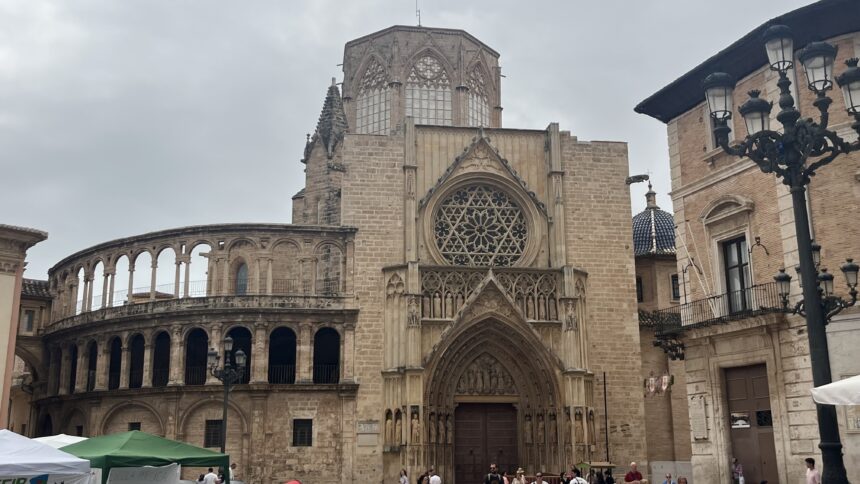
The bells of El Micalet do not announce themselves politely. They arrive suddenly, cutting through whatever is happening below, and for a moment everything feels as if it pauses to listen. They have carried that presence for centuries, sounding over a city that has never stopped changing around them. Long before cafes filled the plazas or El Carmen became a maze of small bars and shops, this sound marked daily life in a place shaped first by Roman Valentia in 138BC, later by Islamic rule, and then by the Christian reconquest in 1238 under James I of Aragon. Each period left traces that still structure the city today, not as separate histories, but as overlapping layers that shape how the city is walked, heard, and experienced. The Cathedral and El Micalet sit at its core, but everything around them is still formed by that accumulated past.
Valencia Cathedral sits where that history becomes physical. It was built after 1238 on the site of the former mosque, which itself was constructed over earlier Roman remains linked to ‘Valentia’. Its Gothic structure developed between the 13th and 15th centuries as Valencia established itself as a Christian kingdom. The octagonal bell tower, El Micalet, completed in 1381, remains one of the city’s most recognizable landmarks and still defines the skyline of the old town. Later Renaissance and Baroque additions expanded the cathedral through chapels and decorative details, without altering its overall footprint or position in the city. Even its layout still reflects earlier Islamic street planning that shaped how the surrounding area was organized. Inside the cathedral, the atmosphere shifts immediately. The sound of the city drops away, and the space pulls upward toward vaulted ceilings designed to emphasize height and light. Side chapels open into quieter spaces filled with sculpture, painting, and devotional objects. Among them is the Holy Chalice, a carved agate cup traditionally associated with the Last Supper and preserved in Valencia since the 15th century. While its historical authenticity is debated, its presence has made the cathedral one of Spain’s most significant pilgrimage sites, which the Vatican has formally recognized for its religious importance. The experience inside is not only visual but spatial, where movement slows and attention becomes directed by scale and light rather than noise.
A few steps away, Plaza de la Virgen opens into that same sound of the bells. It occupies one of the oldest civic points in Valencia, once part of the Roman forum and later a central space under Islamic and Christian rule. Today, it is anchored by the Turia Fountain, which represents the river that historically sustained the city. The square continues to function as a public meeting point, where people gather, pause, and pass through without needing to acknowledge its depth of history. Its role has shifted over the centuries, but its importance as a shared civic space has remained constant.
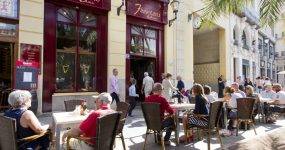
From there, the walk continues into Plaza de la Reina. The atmosphere becomes more open and active, with cafes extending into the square and constant movement across its surface. The Cathedral remains visible from multiple angles, keeping the older structure visually present even as the square’s pace changes. Although the square was significantly reshaped in the 20th century, it still follows the logic of the medieval street network surrounding it, which guides movement toward and away from the historic core.
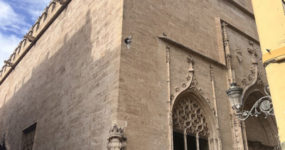
As you leave Plaza de la Reina, the streets suddenly narrow and La Lonja de la Seda appears through them, almost embedded into the fabric of the old city. Known as the Silk Exchange, it is a UNESCO World Heritage Site and one of the most important examples of Valencian Gothic architecture. Built between 1482 and 1533, it reflects a period when Valencia was one of the key commercial centres of the Mediterranean, where trade defined political and social influence as much as religion or governance. Inside, the space is defined by twisted stone columns and ribbed vaults that create a strong vertical rhythm, while sculptural details include gargoyles, fantastical creatures, and human figures carved into the stone in expressive poses. The building is organized into distinct areas, including the Columned Hall, where contracts were formalized, the Chapel with its symbolic vault and religious imagery, the Tower designed by Pere Compte, the Consulate Pavilion that once housed maritime legal functions, and the Orange Tree Courtyard, which offers a quieter moment within the structure.
Just across the street, Mercado Central carries that same sense of exchange in a more immediate, everyday form. Housed in an early twentieth-century modernist structure of iron, glass, and ceramic tile, it contains more than 250 stalls filled with produce from across the Valencian region. Fish, fruit, vegetables, spices, and rice for paella fill the space with colours and aromas, creating a dense sensory environment that reflects both local agriculture and Mediterranean trade. It remains a working market first and foremost, where daily shopping, tasting, and conversation happen simultaneously. Within it, stalls, cafés, and spaces like ‘Central Bar’ reflect the city’s food culture, where traditional dishes and quick meals are part of everyday rhythm rather than performance.
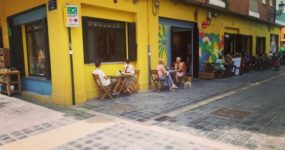
From here, the streets begin to fold inward toward El Carmen. This district sits between the old Islamic and Christian walls, which is why its street layout feels irregular and less structured than the surrounding areas. Today, it is known for its street art, independent cafes, and cultural activity, with institutions like IVAM, the Institut Valencià d’Art Modern, bringing contemporary art into direct contrast with the historic surroundings. The museum focuses on modern and contemporary work, creating a deliberate tension between present artistic expression and the medieval foundation of the neighbourhood outside its doors.
And then, as you move back through the centre, the sound returns again. The bells of El Micalet move across plazas, markets, and narrow streets, not tied to one location but present throughout the entire historic centre. They mark time in a city that has not been rebuilt from scratch but continuously rewritten within the same footprint. From Roman foundations to Islamic streets, from Gothic cathedrals to trading halls and living barrios, everything continues within a single unfolding city.
Report by Lilly Salvador
Article copyright 24/7 Valencia
Photos copyright Lilly Salvador / 24/7 Valencia













Leave a comment