

The “Festa Grossa”: A Soulful Awakening
Walking through the ancient streets of Valencia during this particular Corpus Christi, I felt as though I had stepped across the threshold of time. This was no ordinary year; the city was celebrating its 700th anniversary of this magnificent event. Known locally as the Festa Grossa, this is one of the city’s oldest and most profound traditions. Being there as a witness to seven centuries of living history, I was struck by the beautiful intersection of deep religious devotion and communal joy. The weight of seven hundred years of prayer, music, and tradition hung in the air, transforming the narrow alleys of the Barrio del Carmen into a sacred gallery of the human spirit. In a world that often feels rushed and digital, this 700th anniversary served as a humbling reminder of the enduring power of faith and heritage, anchoring the present in a vast, unbroken chain of Valencian identity.
The Procession of the Rocks (Las Rocas)
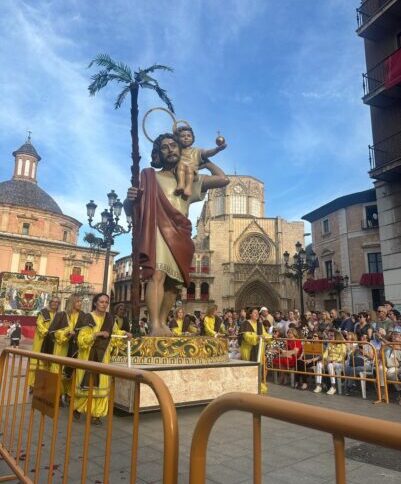
The visual centerpiece of the festival is the Las Rocas, which are massive wooden floats that have traversed these stones for centuries. Seeing these majestic carts pulled by horses through the narrow corridors of the Ciutat Vella was a truly moving experience. The intricate carvings and the sheer history contained within them were breathtaking, making me feel small yet connected to the generations who had stood in these same spots before me. Each Roca, such as the Roca Diablera or the Roca de la Puríssima, is a monumental work of art, some dating back to the 16th century. The sheer physical effort required to manoeuvre these heavy structures through the winding medieval streets is a testament to the dedication of the “Els Amics del Corpus” association. I noticed how the wooden wheels creaked against the cobblestones, a sound that has echoed through Valencia for hundreds of years, bridging the gap between the past and the present.
I spent much of my time quietly observing the “Moma” float and the “Diablera.” The contrast between the brilliant gold of the floats and the weathered, sun-drenched stone of the city walls felt like a metaphor for the human spirit: resilient, beautiful, and deeply rooted in its environment. Local families stood on their balconies, which were draped with traditional embroidered cloths and floral arrangements, watching with a reverence that was contagious. One elderly gentleman, noticing my wonder, leaned over to explain that the “Diablera” represents the defeated devils, a reminder of the triumph of light over darkness. His pride was evident in every word, and it made me realize that these are not just museum pieces; they are the living vessels of a community’s identity.
Sacred Dances and Symbolic Figures
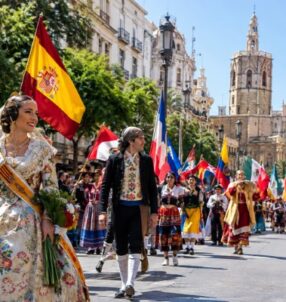
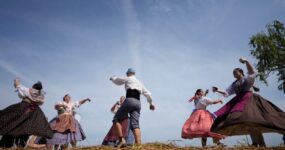
One of the most captivating moments was watching the traditional dances. The Ball de la Moma was particularly evocative with a performance depicting the eternal struggle between Virtue, dressed in pure white, and the Seven Deadly Sins in their colourful, startling masks. It was a simple yet powerful story told through movement that resonated deeply with me. The dancers moved with a practiced precision; their steps synchronized to the hauntingly beautiful melodies of the flutes. Beyond the Moma, I was enthralled by the “Ball dels Nanos” (Dance of the Dwarves) and the “Ball dels Gegants” (Dance of the Giants). These towering figures, representing different parts of the world, danced with a surprising grace that seemed to defy their immense size. Their spinning forms created a kaleidoscope of colour in the Plaza de la Virgen, a visual representation of a world unified in celebration.
Standing in the Plaza de la Virgen, the air thick with the sound of the tabal i dolçaina, I felt the rhythmic heartbeat of the city itself. There was a slow, intentional grace to the movements that commanded respect. In that moment, my own internal pace slowed down, replaced by a profound appreciation for the patience and dedication required to keep such ancient stories alive. The scent of aromatic herbs—rosemary, thyme, and lavender—crushed under the feet of the procession filled the air, creating a sensory experience that was as much about the spirit as it was about the spectacle. I found myself moved to tears by the sight of young children dressed in traditional costume, their faces glowing with excitement as they learned the steps from their elders. It was a beautiful cycle of cultural inheritance unfolding before my very eyes.
The Cavalcada del Convit and the “Poalades”
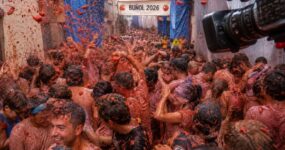
One of the most spirited and unexpected parts of the experience was the Cavalcada del Convit. This parade features the Cirialots and the towering giants, but it is the tradition of the “Poalades” that truly touched my heart, where neighbours laughingly throw buckets of water from their balconies onto the crowd below. This tradition, rooted in a request for rain and a cleansing of the soul, transformed the streets into a playground of joy. As the Capellà de les Roques (the Priest of the Rocks) made his way through the crowd, inviting everyone to the afternoon procession, the water began to fall. At first, it was a gentle spray, but it soon became a jubilant deluge. I was quickly drenched, but rather than feeling inconvenienced, I felt an overwhelming sense of liberation and inclusion.
Witnessing the genuine joy and communal laughter as people were drenched in the summer heat was a beautiful lesson in shared humanity. This tradition isn’t just a spectacle; it is a lived experience that dissolves the distance between people, reminding us that we are all part of one large, vibrant family. A local woman handed me a towel with a warm smile, her eyes sparkling with the shared thrill of the moment. We didn’t speak the same language fluently, but our shared laughter bridged the gap. This kindness was a recurring theme throughout the week; whether it was someone offering directions or a shopkeeper sharing a story about their grandfather’s involvement in the festival, the people of Valencia made me feel like an honoured guest in their home.
Reflections on a Shared Heartbeat
Experiencing Corpus Christi has been an enlightening journey of the soul. Watching the various neighbourhood associations work together with such devotion and pride, passing down knowledge through generations, was truly humbling. It reinforced the idea that the most successful and meaningful parts of life are built upon the bedrock of human connection and a shared sense of belonging. The atmosphere in Valencia during these days is one of collective purpose. There is a palpable energy that vibrates through the city, a mixture of solemnity and celebration. I spent hours simply sitting in the various plazas, observing the preparations. The meticulous way the flower carpets were laid out, petals by petals, mirrored the care with which the Valencians preserve their history. It reminded me that anything of true value requires time, patience, and a community of hands working together.
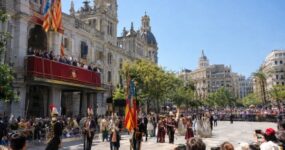
The historical significance of this festival, which has survived through seven centuries of wars, social changes, and the modernization of Spain, is staggering. Reaching the 700-year milestone is a testament to the resilience of culture and the necessity of tradition in providing a sense of continuity. In an era of rapid change, the Corpus Christi festival stands as an anchor, a fixed point of reference that reminds us of who we are and where we come from. During this historic occasion, the sensory experience reached a new level of intensity. I felt a deepened personal connection, realizing that my presence was but a brief moment in a seven-hundred-year-old story. The hospitality of the locals further emphasized this; they do not merely perform these rituals for themselves, but they open their arms to the world, inviting outsiders to understand the depth of their devotion. Every conversation I had, whether with a street performer or a local official, was infused with a gentleness and a genuine desire to share the beauty of their city on such a monumental birthday.
Conclusion
The Corpus Christi festival is far more than a historical event; it is a masterclass in how community and faith can sustain a people for exactly 700 years. I am leaving this experience with a heart full of gratitude for the intricate details, the grand scale of the celebrations, and above all, the welcoming spirit of the Valencians who invited me to witness their history. This milestone is a bridge between the souls of those who walked these streets in the 14th century and those who will walk them centuries from now, reminding us that we are all temporary custodians of a beautiful, eternal flame.
Report by Faith Callaway
Article copyright ‘24/7 Valencia’
Photos copyright Faith Callaway/ 24/7 Valencia
Related Post








Leave a comment