

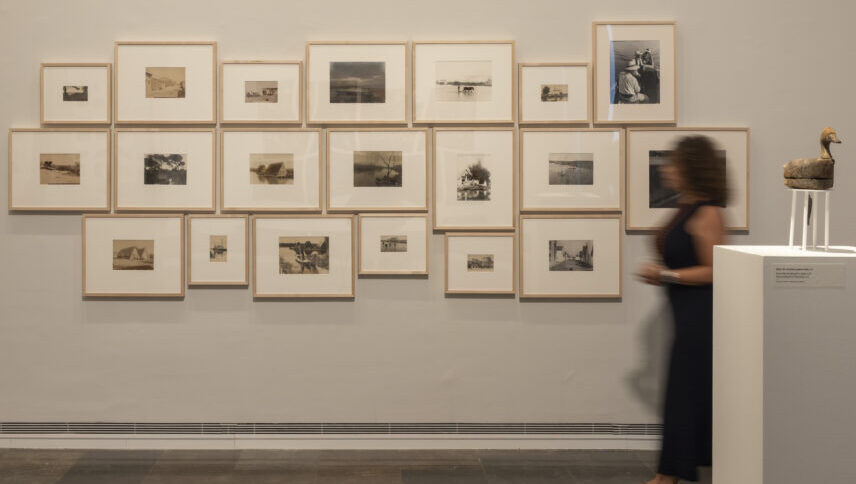
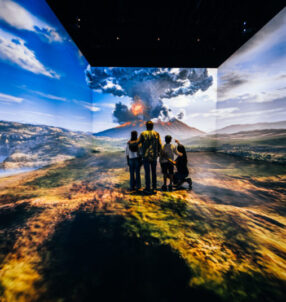
One of Valencia’s most treasured natural spaces is taking centre stage this summer as the Institut Valencià d’Art Modern (IVAM) presents La Albufera, a major exhibition bringing together nearly 180 years of artistic responses to the region’s iconic wetland. Running from July 8th to October 18th at IVAM’s main exhibition venue in Valencia, it marks the 40th anniversary of L’Albufera’s designation as a Natural Park in 1986. Through a combination of historic masterpieces and newly commissioned contemporary works, the exhibition explores how artistic representations of the wetland have evolved alongside changing attitudes towards nature, conservation and the environment.
For centuries, L’Albufera has been woven into the identity of Valencia. Its freshwater lagoon, rice fields, fishing traditions and remarkable biodiversity have shaped local communities while inspiring generations of artists, writers and photographers. As both a cultural landmark and a vital ecological habitat, it has continually evolved alongside the society that surrounds it, making it a fitting subject for an exhibition spanning almost two centuries of artistic interpretation.
The project also revisits an important chapter in IVAM’s own history. In 1985, just before L’Albufera was officially designated a Natural Park, the museum launched the pioneering photographic initiative L’Albufera Visió Tangencial. Twelve nationally and internationally recognized photographers were invited to document the wetland at a pivotal moment, capturing a place undergoing profound environmental and social change. Four decades later, IVAM has returned to the same territory with a new generation of artists. Rather than recreating the earlier project, the museum invited them to explore the area through photography, sculpture, installation and video, offering fresh perspectives on a landscape that continues to evolve.
Historic works by celebrated artists, including Joaquín Sorolla and Gustave Doré, are presented alongside newly commissioned pieces by Bleda y Rosa, Paula García-Masedo, Lucía Loren, Teresa Marín, Jorge Ribalta and Jorge Yeregui. Each artist contributes a distinct perspective. Bleda y Rosa investigates the wetland’s physical, historical and symbolic boundaries, while Paula García-Masedo examines the natural resources, infrastructure and human activity that have shaped the area over time. Teresa Marín presents a video installation centered on the movement of water; Jorge Ribalta focuses on the European eel and its ecological and cultural significance; Jorge Yeregui explores tourism and infrastructure; and Lucía Loren reflects on regeneration, ecological balance and the ongoing care required to sustain this unique environment.
Alongside these contemporary commissions are paintings, photographs, illustrated publications, archival documents and other historical material spanning almost two centuries. The exhibited journey begins with an illustrated book dated back to 1845, one of the earliest visual representations of L’Albufera, and then guides visitors through the many ways artists have interpreted the wetland over the years. The galleries follow the area’s transformation through time. Romantic depictions of the landscape are displayed alongside works documenting traditional agriculture and fishing, while later pieces examine industrial development, urban expansion, tourism and the emergence of environmental activism. Together, they provide a visual record of how L’Albufera has changed socially, politically and environmentally while remaining an enduring symbol of Valencian heritage.
Many of the contemporary works also encourage audiences to look beyond the scenery and consider the fragile balance that sustains the wetland today. Habitat loss, environmental pressures and the growing impact of climate change provide an important context for understanding why places such as L’Albufera require continued protection. Rather than presenting nature simply as something to admire, the exhibition asks visitors to reflect on humanity’s role within it.
Speaking at the exhibition’s opening presentation, IVAM Director Blanca de la Torre explained that the museum’s understanding of landscape has evolved significantly over the past four decades. Rather than viewing nature as something to be simply observed, she said the museum now encourages visitors to recognize themselves as part of a living ecosystem. This approach forms part of IVAM’s vision of an “Amphibious Museum”, an institution that seeks to build meaningful connections with the territories and communities around it.
Curator Sandra Moros believes L’Albufera tells a story that extends far beyond Valencia itself. Through its history, she explained, visitors can better understand wider developments that shaped twentieth-century Spain, including economic growth, urban planning, environmental movements and changing public attitudes towards conservation.
By bringing together historic masterpieces, contemporary commissions and extensive archival material, La Albufera offers far more than an art exhibition. It provides a thoughtful exploration of memory, identity and environmental change while demonstrating how artistic perspectives have evolved over nearly two centuries. Timed to coincide with the 40th anniversary of L’Albufera’s designation as a Natural Park, it serves as both a celebration of one of Valencia’s defining landscapes and a reminder of the importance of protecting it for future generations.
Report by Lilly Salvador
Article copyright ‘24/7 Valencia’
Photos “La Albufera” © Miguel Lorenzo-IVAM
IVAM (Institut Valencià d’Art Modern): C/ de Guillem de Castro, 118, Centre Julio González
Website: https://ivam.es/en/exposiciones/la-albufera/
Socials: https://www.instagram.com/gva_ivam/ & https://es-es.facebook.com/gvaIVAM
Admission: €5, but free on Wednesdays from 4 PM to 7 PM and all day on Sundays.
Related Post

















Leave a comment