

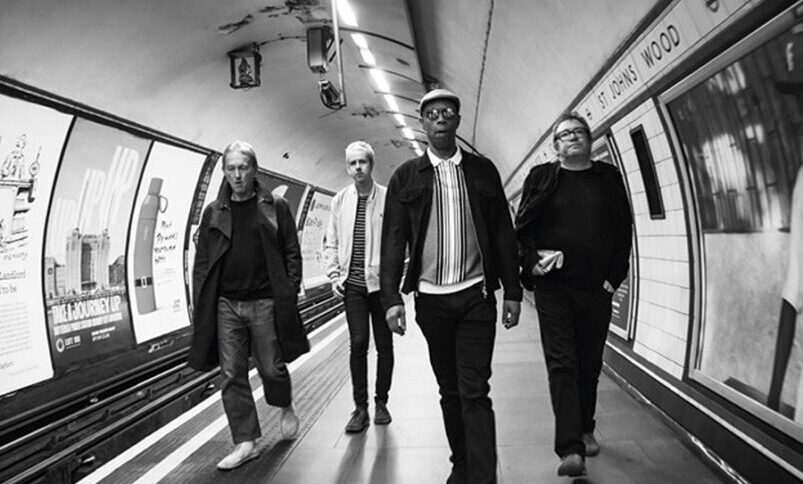

Britpop legends ‘Ocean Colour Scene’ are set to bring a wave of nostalgia to ‘Visorfest’ in Valencia this September 2026, as they celebrate 30 years of their seminal album ‘Moseley Shoals’—the record that defined an era with anthems like “The Riverboat Song” and “The Day We Caught the Train.”
Ahead of their highly anticipated Valencia performance, we caught up with guitarist Steve Cradock, the band’s musical backbone and one of the UK’s most respected songwriters. Beyond his work with ‘Ocean Colour Scene’, Cradock has built an impressive career collaborating with the likes of Paul Weller since the 1990s, earning a reputation for his distinctive guitar style and sharp melodic instincts.
Responsible for Moseley Shoals, an album that has sold over a million copies and earned widespread acclaim, Cradock remains a virtuoso guitarist with real soul. He is grounded, communicative and continues to be a producer of quality music—and a good bloke too.
EXCLUSIVE INTERVIEW WITH STEVE CRADOCK OF ‘OCEAN COLOUR SCENE’.
24/7 VALENCIA: Can you take us through each track on ‘Moseley Shoals’ by Ocean Colour Scene?
STEVE CRADOCK: The Riverboat Song: “When we wrote we it, we didn’t conceive it as a ‘single’ really. For us, it was coming from tracks like ‘Green Onions’ by Booker T and the MGs and maybe ‘What I’d Say’ by Ray Charles. It was kind of like a bluesy-groove thing with a great lyric over the top of it. We agreed to put it out as a single because we thought it identified our sound for us…as opposed to it being too much like just a ‘pop song’.
It was kind of like a bluesy jam that worked for us in a way. It got people to know what ‘our sound’ was. ‘Moseley Shoals’ was our second album and it hasn’t dated…unlike our debut album which was done in the ‘baggy’ period.”
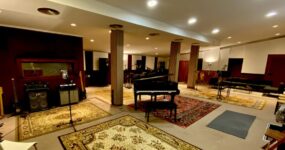
The Day We Caught the Train: “That was recorded at ‘Zella Studios’ in Edgbaston in Birmingham. So, it was not recorded where we recorded the rest of the album…which was in our own ‘Moseley Shoals’ studio. Simon wrote it about two people. It’s about Jimmy from ‘Quadrophenia’ and also about producer Jimmy Miller (who we had worked with before). Miller had been the producer for The Rolling Stones, Traffic and The Spencer Davis group. All those bands are an influence on us too. Funnily enough, Simon Fowler (the singer) didn’t want the track ‘The Day We Caught the Train’ on the album! With hindsight, that’s unbelievable. Listening back, I guess we were trying to be ‘The Beatles’ musically and have a bit of fun. If you put a “Oh-La-Oh-La” in anything, it helps! What’s weird about that track is how it has resonated over the years, at live gigs. It has become a really celebratory moment in the set.”
The Circle: “For starters, it’s one of Simon’s best songs and best lyrics and the melody too. Simon says he wrote it complete and then came to the studio but that isn’t true, from what I remember. The third verse comes from a Curtis Mayfield album called ‘Back to the World’. If you open the gatefold sleeve, on the inside of it, Curtis writes a verse about singing a song for all those (people) on their birthday. Simon was inspired by that, for the third verse of ‘The Circle’.
Musically, it’s got Paul Weller playing lead guitar on it. I’d done a session with Paul on London on that same day, some radio session. And then we drove up from London to Birmingham… to the studio. We set up the guitars and it was a really small studio. We were in the control room and we both played our guitar parts on the track. I think it was just one take, all live and as it happened and as it sounds on the record too. What’s interesting about that evening is that there was a guy called Johnny Walsh there, from MCA records. He signed us that night because he couldn’t believe that Paul was up there playing guitar with a band that was kind of doomed at the time.”
Lining Your Pockets: “It’s a slow waltz tune and that is a very deep tune too. Simon was talking about a friend of his. I thought it was about me, at first, when I heard it… but thankfully it wasn’t. Simon was actually talking about a couple of friends. He hadn’t fallen out with them but he was just being ‘secretly’ honest.”
Fleeting Mind: “A very personal song. That’s Simon in his ‘stoned’ state with a fleeting mind, smoking spliff. Musically, we were listening to Nick Drake and we even did demos with flutes on it.”
40 Past Midnight: “It’s kind of a bluesy jam. Oscar (the drummer) was on the piano, I was playing the drums, Damon on the bass. I was kind of into Paul Kossoff at the time. I’m still into ‘Free’, I love them. There’s an element of that and then Simon just jammed a vocal over the top. It’s very organic, it’s a bit of a throwaway song…but it’s kind of ‘Stonesy’ and ‘Free’ with an early 70s British rock sound, I think. It has some great solos on it, some great guitar playing.”
One for the Road: “That was a live session, we all recorded it in one room. Paul Weller came up for a couple of days and he was on piano (an Ian McLagan style-part) and I think he did some backing vocals too. Simon came up to the studio with the song already completed. It was a hungover session! It has quite a country feel.”
It’s My Shadow: “Wow! That’s an amazing song. I mean Simon really found himself as a writer for ‘Moseley Shoals’. He was just getting better and better. He was smoking a lot of dope and we were doing acid. He had a purpose and he was becoming a serious writer and getting better at it. All of this album was Simon really finding his feet as a great writer. Musically, I think it’s probably just us emulating what music we loved like The Beatles. I can hear lots of different things on it, in terms of influences.”
Policemen & Pirates: “It’s about ‘don’t throw stones, if you live in glass houses’… I guess it means that. It’s Simon’s wordplay really, as a great lyricist. Musically and sonically, it was us trying to be ‘The Move’.”
The Downstream: “A lovely, slow song in 3/4 time. The title of the album ‘Moseley Shoals’ comes from this song because I played ‘The Downstream’ to a DJ friend of ours called Sean Rowley. He is the guy (facing the camera) on the front cover of ‘What’s the Story Morning Glory?’ by Oasis. He said ‘The Downstream’ sounded like music from ‘Muscle Shoals’ in Alabama. There is a Birmingham in Alabama and we told him we lived in Moseley, on the outskirts of Birmingham in England. So, we decided to call the album ‘Moseley Shoals.’ ”
You’ve Got It Bad: “It came from our producer Brendan Lynch. He had an Akai sampler and he had a loop of the Beach Boys doing an 11-minute version of ‘Good Vibrations’! We took a little segment of it, then we looped it and then I played drums on it. I then put guitars on it and it was like this ‘heavy dirge’ track and out of that came the song.”
Get Away: “This song has Simon’s folk influence, whcuh is his background and it also has psychedelic guitar on it too. That song sums up every part of the band, in a way. It’s one chord so it has a drone feel. By listening to that tune, you can get what ‘Ocean Colour Scene’ are all about from this song.”
Can you tell us about the guitars you play and have played? “I have been playing a ‘Gibson Les Paul Gold Top’ since before ‘Moseley Shoals’ and I have continued to play that since I started playing with Paul Weller… when I dropped playing the Strat so much. It has a bigger & fatter sound than the Fender Stratocaster. On the early albums I also played a Gibson ES 335, which is a guitar I really love. To be fair, I do play a Stratocaster on ‘You’ve Got it Bad’.”
You have great ‘taste’ as a guitarist when it comes to overdubs, fills, solos and the wah-wah too. It’s all about serving the song rather than overdoing it. What is your approach? “I guess it’s about using different colours and textures. A good example of this is the guitar solo of ‘All Along the Watchtower’ by Jimi Hendrix. He uses three different textures and within that solo there are three different and beautiful things happening too. I guess I am aware of that approach and knowing that there’s nothing worse than guitar players going on and on. It’s an arrangement thing, using the guitar in small parts and not overdoing it.”
What have you learnt from playing with Paul Weller all these years? “Wow! I have learnt probably everything I know from being around Paul. He’s very unguarded, so what you see is what you get… and it rubs off. He’s very good with other musicians, he’s a great arranger. Obviously, he’s been in a group all his life. He’s just amazing to be around. He’s a fantastic songwriter and he is a great musician. He’s been my guardian angel”.
TICKETS: https://visorfest.com/
Interview by Will McCarthy
Article copyright ‘24/7 Valencia’

















Leave a comment