

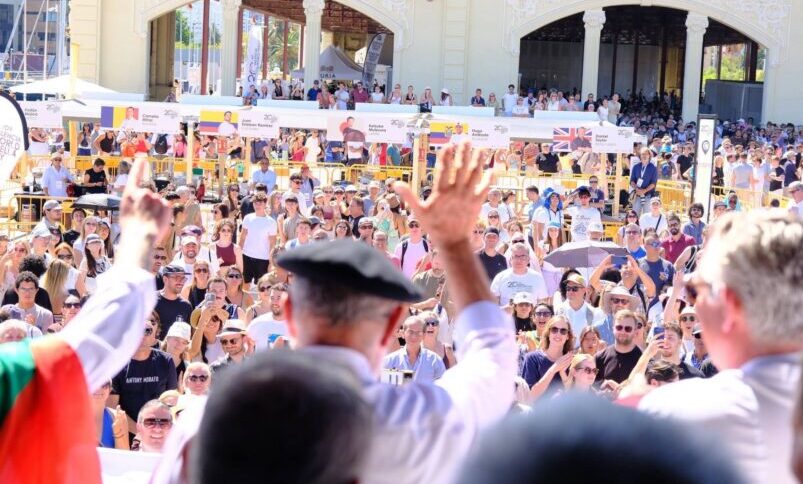
Twelve chefs. Twelve countries. One giant paella showdown. And when the smoke finally cleared at La Marina, it was Mexico celebrating, Japan taking second and Ecuador third.
Add twelve international chefs, enormous paella pans, clouds of wood smoke, the smell of rice and fire drifting across the waterfront, a crowd of hungry spectators and the title of World Paella Champion into the mix — and you’ve got something rather special.
That was World Paella Day 2026.
And yesterday, Sunday 20 September, La Marina became the unlikely culinary capital of the planet as chefs from twelve countries gathered to do something which, at first glance, sounds almost sacrilegious to a Valencian:
make their own version of paella.
But that is precisely what makes World Paella Day so fascinating.
The paella may have been born here, but it has travelled.
And travelled a very long way.
 MEXICO TAKES THE CROWN
When the final results were announced, it was Mexico’s Froilán Mújica who had the biggest reason to smile.
His winning creation, “Arroz de la nostalgia”, took first prize, with Japan’s Keisuke Mutsuura finishing second and Ecuador’s Hugo Andrade taking third.
And Mújica’s winning paella was certainly not an attempt to simply reproduce a traditional Valencian recipe.
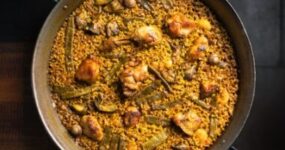
His dish combined Albufera rice, grouper and hake kokotxas cooked pil-pil, with touches of Venezuelan sweet chilli and Mexican chiltepín. The jury praised the balance and creativity of the dish.
In other words, this was Valencia’s most famous dish looking in the mirror and discovering that it had acquired a passport.
 JAPAN AND
  ECUADOR COMPLETE THE PODIUM
Japan’s Keisuke Mutsuura took second place, while Ecuador’s Hugo Andrade claimed third.
And that international podium was a pretty good illustration of what World Paella Day has become.
This wasn’t simply a Spanish cooking competition.
The twelve finalists came from Uruguay, Brazil, Mexico, Romania, France, Switzerland, Denmark, Japan, Bulgaria, Ecuador, Colombia and the United Kingdom.
They had all arrived in Valencia carrying their own culinary traditions — but once the fires were lit, they had to work with one very Valencian essential:
rice from the Albufera.
 FIRE, RICE AND A LOT OF PRESSURE
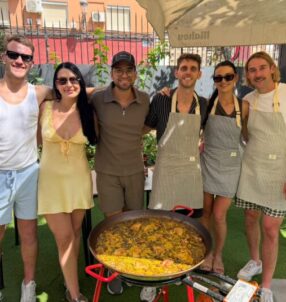
The competition began in the morning, with the twelve chefs cooking in four groups of three.
For the spectators, there was something wonderfully Valencian about the whole spectacle.
The fire.
The enormous pans.
The concentration.
The smell.
And that slightly nervous period when everyone starts looking at everyone else’s paella.
Because paella is not a dish that politely sits in the kitchen waiting to be served.
You can see it being made.
You can hear the fire.
You can smell the stock.
You can watch the rice absorb the liquid.
And then comes the moment every paella cook knows:
Will the rice be right?
The judging wasn’t simply about appearance. The jury assessed factors including taste, aroma, presentation and, crucially, the cooking of the rice.
And then there is the word every serious paella lover knows:
socarrat.
That delicious, slightly toasted layer of rice at the bottom of the pan.
Get it right and you’ve got something magical.
Get it wrong and, well…
Valencia will know.
 FROM VALENCIA TO THE WORLD
What struck me about World Paella Day is that it isn’t really about proving that somebody outside Valencia can make a better paella than a Valencian.
It is about something rather more interesting.
What happens when the world’s cooks take a Valencian idea and make it their own?
Over the past few months, the competition has travelled around the world, with qualifying events in places including Uruguay, Romania, France, Mexico, Japan, Ecuador, Switzerland, Denmark, Bulgaria, Colombia and Puerto Rico before the finalists came together in Valencia.
The finalists also spent time discovering the world that lies behind the dish — visiting L’Albufera, the Central Market and local rice producers, as well as meeting Valencian rice masters and paella specialists.
And that is important.
Because paella isn’t simply rice with things thrown into it.
It is landscape.
It is agriculture.
It is fire.
It is Sunday lunches.
It is family.
It is friends sitting around a table.
It is the Albufera.
It is Valencia.
 A PAELLA FOR EVERYONE
Once the serious competition was over, the atmosphere changed.
The huge competition was followed by a more relaxed celebration, with members of the public able to enjoy portions of paella for just €6, accompanied by music and DJs at La Marina.
And perhaps that is the real magic of paella.
After all the judging, trophies, chefs, international delegations and culinary experimentation, it comes back to its most basic purpose:
people eating together.
Mexico may have taken the trophy.
Japan went home with second place.
Ecuador took third.
But Valencia was the real stage.
And the dish that started life in the rice fields around the Albufera once again demonstrated just how far it has travelled.
From Valencia to Mexico.
From Valencia to Japan.
From Valencia to Ecuador.
And, yesterday at least, from La Marina to the rest of the world.
WORLD PAELLA DAY 2026 — THE PODIUM
 MEXICO — Froilán Mújica
“Arroz de la nostalgia”
 JAPAN — Keisuke Mutsuura
 ECUADOR — Hugo Andrade
12 countries. One pan. One very international Valencian obsession.
And if there is one thing World Paella Day 2026 made abundantly clear, it is this:
Paella may belong to Valencia — but these days, the whole world wants a piece of it.
Report by ’24/7 Valencia’ team
Article copyright 24/7 Valencia








Leave a comment